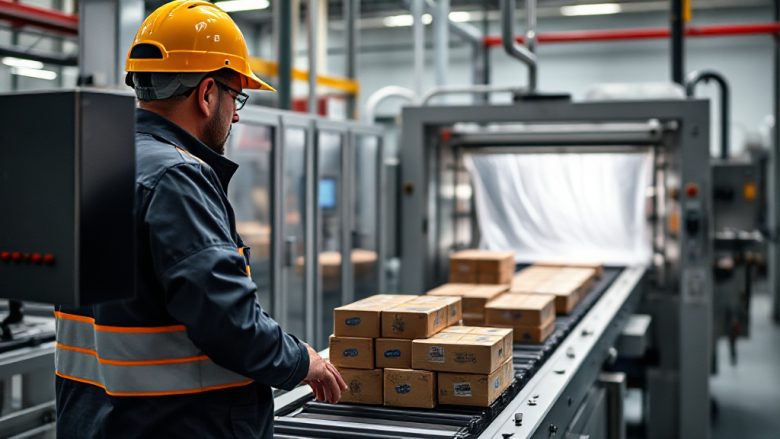
A Day at the Shrink Wrapping Machine: Notes From the Operator’s Side
I start every shift the same way: the machine is cold, the film roll is fresh, and nothing moves until I have walked the line once. If you are new to the floor, this is the short answer to what the job really involves: a Shrink wrapping machine is only as reliable as the checks you do before you press start. The rest of the shift is rhythm, observation, and small corrections made before they become stoppages.
I have run sealing lines, vacuum units, and tunnels long enough to know that the first twenty minutes decide the next eight hours. So here is my shift, written the way I actually work it.
Start of Shift: The Cold Machine Checks
The machine is still at room temperature and the film roll is untouched. That is the best moment to catch problems, because nothing is hot enough to burn me and nothing is moving fast enough to hide a fault.
Walk the line before you touch a control
I check the conveyor for debris, loose tools, and leftover product from the previous shift. I look at the film roll for wrinkles, edge damage, or a core that is not sitting square. A roll that is loaded slightly off-centre will track badly for hours, and you will blame the machine instead of the roll.
Then I check the tunnel mouth and the sealing bar for film build-up. Residue from yesterday’s run is the most common cause of a weak seal on the first hour of production.
Confirm settings against the job card
I never trust the settings left by the previous operator. I read the job card for film gauge, product size, and pack count, then set tunnel temperature and conveyor speed to match. A shrink tunnel Machine that is still tuned for yesterday’s small cartons will scorch today’s larger packs.
I run three test packs and inspect them before the line goes live. If the film is loose at the corners, I adjust speed first and temperature second. Speed changes are gentler on the film and easier to reverse.
Never start production on a test pack you have not physically handled. Looking at it on the conveyor is not the same as squeezing the seal and checking the wrap.
Mid-Shift: Rhythm, Film, and Small Corrections
Once the line is running, my job shifts from setup to observation. The machine does the work; I watch for the first sign that something is drifting.
On an Automatic Shrink Wrapping machine, the most useful habit is a fixed inspection interval. I pull one pack every few minutes and check three things: seal integrity, wrap tightness, and film trim. If any one of them changes, I stop and correct before the next pallet is built.
What I watch for on every pack
- Weak or stringy seals — usually heat, pressure, or a dirty sealing bar.
- Loose wrap at the corners — often conveyor speed too high for the film gauge.
- Film holes or scorching — tunnel temperature too high or dwell time too long.
- Misaligned packs — infeed guides have drifted or the product is not sitting flat.
I keep a small notebook at the control panel. Every adjustment gets a time and a reason, so the next operator can see what changed and why. That single habit has saved more arguments on my line than any maintenance schedule.
Film changes and the five-minute rule
When the roll runs out, I do not rush the splice. I stop the line, load the new roll square, thread it cleanly, and run two test packs before restarting. Rushing a film change is how you end up with a jam inside the tunnel and a twenty-minute cleanup.
I also track roll usage against pack count. If a roll is finishing faster than the job card predicts, I check for film being wasted on trim or on packs that are being re-wrapped.
End of Shift: Handover, Cleaning, and Honest Notes
The last thirty minutes matter as much as the first. A clean machine and an honest handover note are what make the next shift start smoothly.
Shut down in the right order
I stop the infeed, let the tunnel clear, then switch off the heat and let the machine cool before cleaning. Cleaning a hot sealing bar is how people get burned. Once it is cool, I clear film trim, wipe the sealing bar, and check the tunnel interior for residue.
I leave the machine with a fresh roll loaded if the next job uses the same film, and an empty spindle if it does not. Guessing the film at 6 a.m. wastes time nobody has.
Write a handover note that means something
My note covers four things: what ran, what changed, what is still drifting, and what I would check first. If the seal was getting weak near the end of the shift, I say so. If the tunnel temperature was creeping up, I say that too.
Supervisors sometimes ask why I spend ten minutes on a note. The answer is simple: a clear handover prevents repeat faults, and repeat faults are what turn a good line into a bad week.
What I Would Tell a New Operator
If you are starting on a shrink wrapping line, learn the machine in this order: film path first, sealing bar second, tunnel settings third. Most faults come from the film path, not from the electronics.
Keep your test packs. Date them and keep them near the machine so you can compare today’s wrap against a known good one. When a supervisor asks whether the wrap has changed, you can show them instead of arguing.
And respect the warm-up. A cold tunnel will always give you a weak first pack, so run test packs until the wrap is consistent before you let production through. That single habit has kept my lines running and my rejects low for years.